


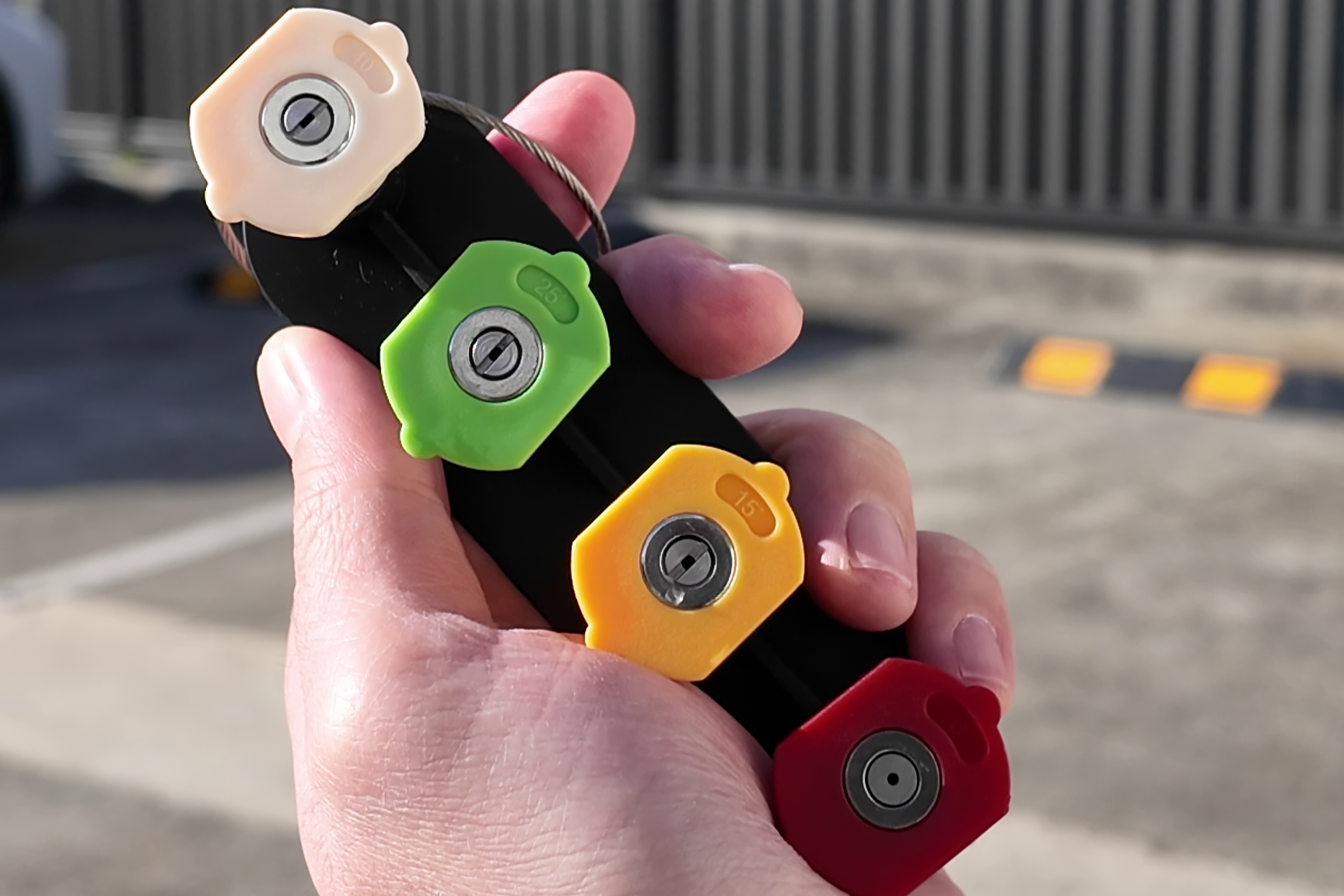
Nozzles determine the spray pattern and intensity, making them the most critical factor for cleaning effectiveness and surface safety. They are typically color-coded for quick identification the standard (Red), (Yellow), (Green), and (White) spray tips, specialized nozzles make certain tasks much faster and safer.
Here’s a guide to pressure washer nozzle spray angles, color-coded for easy identification, and their common applications: 0° (red) for concentrated cleaning, 15° (yellow) for heavy-duty cleaning, 25° (green) for general-purpose cleaning, and 40° (white) for light-duty and delicate surfaces. CleanSkin’s 1/4″ Quick Connect Spray Nozzle Tip is a good start if you are looking to upgrade your car washing game.
| Nozzle Color | Spray Angle | Common Applications |
| Red | 0° | Concentrated cleaning, removing stubborn stains like chewing gum or graffiti |
| Yellow | 15° | Heavy-duty cleaning, removing tough dirt, grease, or paint from hard surfaces like concrete or brick |
| Green | 25° | General-purpose cleaning, washing patios, decks, and siding |
| White | 40° | Light-duty cleaning, rinsing windows, vehicles, and delicate surfaces |
Key Benefits of Nozzles:
- Specialized Cleaning Power: Attachments like the Turbo Nozzle (or Rotary Nozzle) create a rapidly spinning 0° jet, combining intense cleaning power with a wider coverage area for concrete and hard surfaces.
- Surface Protection: Using the correct nozzle ensures you apply the necessary pressure without damaging surfaces like wood, paint, or stucco.
- Task-Specific Efficiency: Narrow-angle nozzles (0° to 15°) are for powerful, concentrated cleaning of tough stains, while wider-angle nozzles (25° to 40°) are for general cleaning and rinsing of larger, more delicate surfaces.
What to Look Out For
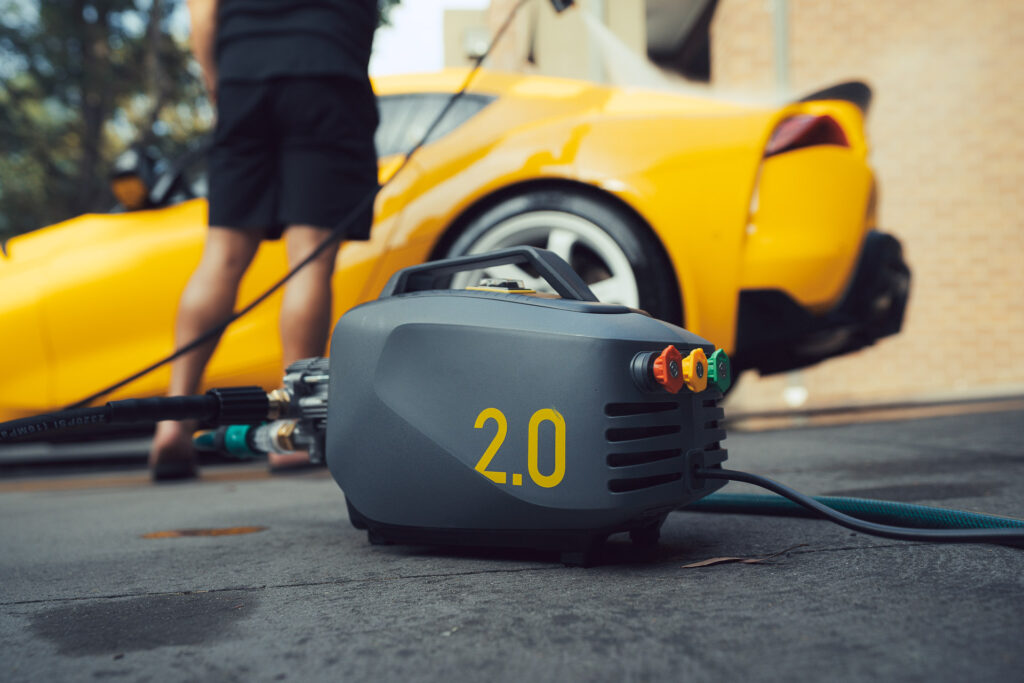
- Orifice Size (The ‘Size’ or ‘GPM’ Rating): This is the most critical factor. The orifice size must be correctly matched to your pressure washer’s PSI (Pressure) and GPM (Flow Rate). Using the wrong size can either reduce cleaning power or cause unnecessary strain and damage to your machine’s pump. Always check your pressure washer’s specifications against the nozzle chart.
- Nozzle Set: A basic quick-connect nozzle set should include a range of angles (0°, 15°, 25°, 40°, and a low-pressure black soap nozzle).
- Turbo Nozzle: If you frequently clean concrete or heavily soiled hard surfaces, a high-quality turbo nozzle is an indispensable time-saver.
Determining the Correct Nozzle Orifice Size
The orifice size is the last two or three digits of a nozzle code (e.g., in “25040,” the size is 4.0), and is crucial for getting the correct working pressure from your machine. Choosing the right orifice size is key to protecting your pressure washer and the surface you’re cleaning. Use the chart below to match your machine’s PSI and LPM for the ideal nozzle setup.
| Orifice Size | Pounds per Square Inch (PSI) | |||||||||||||||||||
| 1015 | 1160 | 1305 | 1450 | 1595 | 1740 | 1885 | 2030 | 2175 | 2320 | 2465 | 2610 | 2755 | 2900 | 3045 | 3190 | 3335 | 3480 | 3625 | ||
| 020 | Litres per Minute (LPM) | 3.81 | 4.07 | 4.32 | 4.55 | 4.78 | 4.99 | 5.19 | 5.39 | 5.58 | 5.76 | 5.94 | 6.11 | 6.28 | 6.44 | 6.60 | 6.75 | 6.91 | 7.05 | 7.20 |
| 025 | 4.76 | 5.09 | 5.40 | 5.69 | 5.97 | 6.24 | 6.49 | 6.73 | 6.97 | 7.20 | 7.42 | 7.64 | 7.85 | 8.05 | 8.25 | 8.44 | 8.63 | 8.82 | 9.00 | |
| 030 | 5.73 | 6.12 | 6.50 | 6.85 | 7.18 | 7.50 | 7.81 | 8.10 | 8.39 | 8.66 | 8.93 | 9.19 | 9.44 | 9.68 | 9.92 | 10.15 | 10.38 | 10.61 | 10.83 | |
| 035 | 6.68 | 7.14 | 7.58 | 7.98 | 8.37 | 8.75 | 9.10 | 9.45 | 9.78 | 10.10 | 10.41 | 10.71 | 11.01 | 11.29 | 11.57 | 11.84 | 12.11 | 12.37 | 12.63 | |
| 040 | 7.63 | 8.16 | 8.66 | 9.12 | 9.57 | 9.99 | 10.40 | 10.79 | 11.17 | 11.54 | 11.90 | 12.24 | 12.58 | 12.90 | 13.22 | 13.53 | 13.84 | 14.13 | 14.43 | |
| 045 | 8.59 | 9.18 | 9.74 | 10.26 | 10.76 | 11.24 | 11.70 | 12.14 | 12.57 | 12.98 | 13.38 | 13.77 | 14.14 | 14.51 | 14.87 | 15.22 | 15.56 | 15.90 | 16.23 | |
| 050 | 9.54 | 10.20 | 10.82 | 11.40 | 11.96 | 12.49 | 13.00 | 13.49 | 13.96 | 14.42 | 14.86 | 15.29 | 15.71 | 16.12 | 16.52 | 16.91 | 17.29 | 17.66 | 18.03 | |
The Formula: The ideal nozzle size () is calculated based on your machine’s Gallons Per Minute (GPM) and Pounds per Square Inch (PSI).
Practical Application:
- Find your machine’s GPM and Target PSI (e.g., 4.0 GPM, 3000 PSI).
- Calculate the value
- Choose the closest stocked size. Nozzles are typically stocked in 0.5 increments (e.g., 3.0, 3.5, 4.0, 4.5, 5.0). For a calculated 4.6, you would typically choose a 4.5 orifice.
- Effect of Size Selection:
- Undersized Nozzle (e.g., 4.0): The pressure will increase (more force), but this puts unnecessary strain on the pump and unloader, risking damage.
- Oversized Nozzle (e.g., 5.0): The pressure will drop (less force), resulting in poorer cleaning performance and wasted time.
Advanced Nozzles and Spray Tips
- Turbo/Rotary Nozzle: This attachment combines the intense cleaning power of a stream with a rotating motion, covering a area. It’s excellent for heavy-duty work on concrete and masonry, but use caution, as the concentrated force can damage softer surfaces like wood or paint. An excellent example would be the CleanSkin 1/4″ QC Turbo Nozzle.
- Drain Jetter Nozzles: These are designed for clearing clogged pipes and drains. They typically have rear-facing jets that propel the hose forward into the pipe and a forward-facing jet to blast away the blockage.
- Multi-Function/Adjustable Nozzles: These combine several standard spray patterns into one single head, allowing you to quickly switch between spray angles, and patterns with a simple twist or dial, saving you time.