
In Australia, high UV levels and varying water pressures mean “standard” garden gear usually ends up leaking or cracking. To build a reliable detailing setup, you need to move beyond the hardware store basics.
The Hardware: Stainless Steel & Brass
While Australia uses the standard 12mm (1/2″) click-link system, the material choice is where most people fail.
- Ditch the Plastic: Plastic “click” connectors are the primary cause of pressure drops and leaks. They crack under sun exposure and fail under the high-pressure spikes common in detailing.
- The Stainless Upgrade: Moving to a Stainless Steel Quick Connect Kit (like the CleanSkin Upgrade) is the permanent fix. These offer a larger internal bore to prevent pump cavitation and make swapping tools instantaneous.
- Control Valves: A heavy-duty Control Valve at the end of your hose is a game-changer. It allows you to shut off the water and swap between your pressure washer and a rinse nozzle without walking back to the tap.
Choosing Your Hose
Your pressure washer needs a consistent “sip” of water to stay healthy.
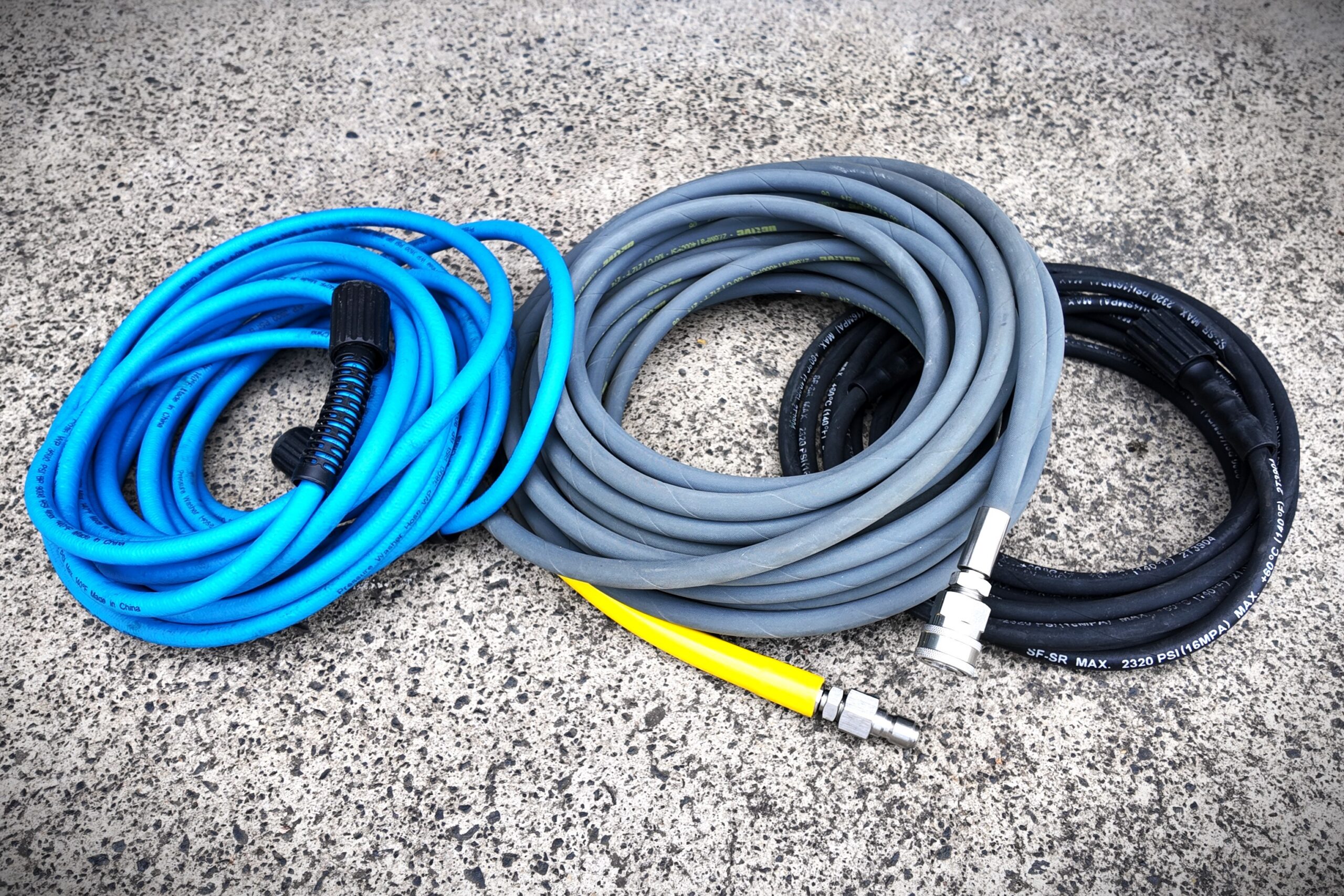
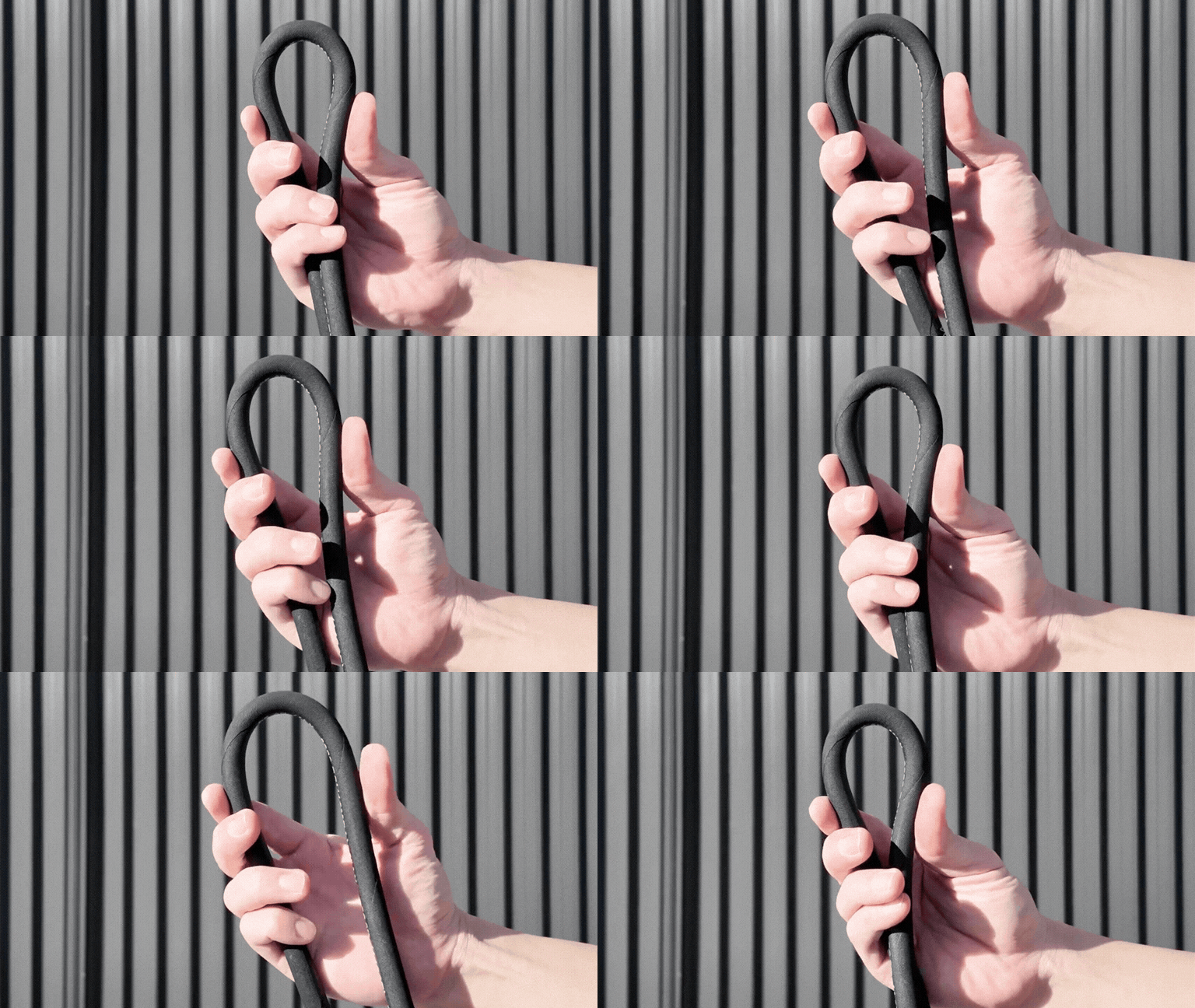
- Anti-Kink is King: Always opt for braided or knitted hoses. If a hose kinks, the pump starves for water (cavitation), which causes internal damage.
- Size Matters: While 12mm is standard, if your hose run is over 20 meters, consider stepping up to an 18mm high-flow hose to maintain adequate volume to the machine.
Reel Options: Convenience vs. Performance
- Retractable Reels: Units from Hoselink or CleanSkin are unbeatable for tidiness and keeping the hose off the hot driveway. Just ensure the model you pick has a high-flow internal bore.
- Manual Static Reels: These are preferred for high-end setups using heavy-duty rubber hoses. Rubber doesn’t “memory coil” like plastic, making it easier to manage during a long wash session, but it requires a sturdy manual reel to store correctly.
Pro-Tip: Purge the Air
Before you flick the power switch on your pressure washer, always run water through the system (with the power OFF) until a steady stream comes out of the gun. This “purging” clears air pockets that can air-lock the pump or blow out internal seals.